
Initial public offerings (IPOs) have attracted droves of retail investors to the stock market in CY22. But these applicants have lost money on 40 per cent of the fresh issues this year - a trend that may impact sentiment towards maiden share sales during the remaining part of the year. Of the 14 companies that have listed this year, five have closed below their issue price.

'A soft landing of the Indian economy would be a long-term positive for the equity markets.'

Medicine sales grew at a fast clip in smaller cities like Madurai, Meerut, Agra, and Varanasi in the last 12 months. The domestic pharmaceutical market, overall, has grown 12.3 per cent in this period, according to data from IQVIA MAT for April. MAT refers to the moving annual turnover or the turnover of the last 12 months. The data further showed that the top 30 cities contributed around 32 per cent to sales.
With all major US export-oriented drug manufacturing plants in the country up for inspection in 2022, some estimates peg that at least 20-30 per cent of the new product launches lined up for the US will be subject to on-site inspection by the US Food and Drug Administration (USFDA). The last two years saw limited physical inspections due to travel restrictions during the pandemic. "Pre-Covid, the frequency and number of inspections of manufacturing plants in India by USFDA had increased significantly," analysts from ICICI Securities Research noted. "With growing ANDA filings, especially for complex products. "We expect this trend to return with the environment normalising," analysts from ICICI Securities Research noted.

An analysis of WHO data shows that most of the countries with an older cohort of population and higher in the development index had a lower excess mortality rate than India.
LIC's $2.7-billion initial public offering (IPO) shall be the fifth-biggest globally in CY22. South Korean EV battery maker LG Energy Solution holds the record for the year's largest IPO at $10.8 billion, while Chinese mobile communications provider China Mobile IPO, which raised $8.6 billion, comes second. Dubai Electricity and Water Authority's (DEWA's) $6.1-billion IPO in March is currently the third biggest public offering for the year, followed by China National Offshore Oil Corporation's (CNOOC's) IPO; the firm had raised $5.1 billion by issuing shares in Mainland China after delisting from the American bourses.

'A patient visits for any other treatment, but a routine Covid test finds him to be positive.' 'Not only are they, but their whole family is also coming out to be positive.'
Indian drug firms get a shot in the arm in the $12 bn Australian drug market as the Therapeutic Goods Administration (TGA), Australia agrees to accelerate the drug approval process in that country for Indian players who already have an approved plant and product from one of the stringent regulatory authorities like US, EU or Canada. From current sales of $340 mn, the Indian firms can see a significant upside in sales; felt Dinesh Dua, former chairman of the Pharmaceutical Exports Promotion Council of India (Pharmexcil), and the MD of Nectar Lifesciences. He highlighted that only 12 percent of the Australian drug market is generic, as against 80-90 per cent in the US or EU. Of this $1.5 bn generic drug market in India, Indian companies have a small share.

The number of draft red herring prospectuses (DRHPs) filed with the markets regulator - Securities and Exchange Board of India (Sebi) - jumped nearly fivefold to 145 in 2021-22 (FY22), compared with just 30 in the preceding financial year (2020-21, or FY21). This was on account of companies rushing to take advantage of a favourable market sentiment towards initial public offerings (IPOs), triggered by an influx of new investors, surge in the secondary market, and encouraging performance of newly listed stocks. In fact, DRHPs filed in FY22 was 4x the previous 10-year average and the highest since 2007-08, according to primary market tracker PRIME Database.
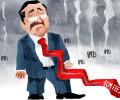
Experts say companies wanting to launch IPOs will have to scale back their expectations given the fall in valuations.
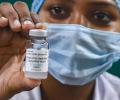
Sources close to the development said the company had no further supply commitments to the WHO, and therefore, there was no suspension of any upcoming orders, reports Sohini Das.

Sources indicated that there were no fresh orders from the Government of India, and their supply commitments have ended as of March 31, reports Sohini Das.
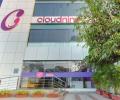
No expecting mother ever needs to travel for more than 30 minutes to reach one of their hospitals, believes the Cloudnine group.

With intermittent disruptions in the supply chain of raw materials from China, the Indian pharma industry has braced itself with bigger inventory. Even smaller drug makers are now carrying a month of buffer stock of key raw materials, said industry insiders. The lockdown in various Chinese provinces, including Shanghai, is likely to delay shipments by two weeks to a month, said domestic players. Shipments are critical for the Indian drug industry, which imports 70 per cent of its raw material from China.
Once stability returns to the secondary market, companies that have obtained approval from Sebi will start tapping the market.

Stocks of Indian companies with exposure to Europe fell on Tuesday amid concerns about the impact on their sales in case the Russia-Ukraine crisis worsens and the US and its allies impose economic sanctions on Russia. While top conglomerates, including Reliance Industries, the Tata group, and Aditya Birla Group, said they did not have any significant exposure to Russia, executives of some of the oil and gas, pharmaceutical, and tea companies said they were monitoring the situation closely as they earned substantial income from the region. Russian President Vladimir Putin on Monday ordered troops into two breakaway regions of eastern Ukraine after announcing that Russia would recognise their independence.

While the infection has been mild in most reported cases, those below two years of age are showing signs of acute infection.

Adar Poonawalla says it took a five-minute chat with his father Cyrus before making the decision to manufacture Covishield. The bet paid off, and handsomely. Serum Institute now has the capacity to make 4 billion doses of Covishield annually.

Year 2021 was another great year for fund-raising through equities. A total of Rs 1.8 trillion was raised through initial public offerings (IPOs), qualified institutional placements (QIPs), and rights issues, against the Rs 1.7 trillion raised in the previous year. Funds raised through IPOs quadrupled, while those from rights issues and QIPs reduced.

The company had in December said that the CDSCO had approved a 12-month shelf life for Covaxin, which was nine months earlier, Sohini Das reports.
 © 2026 Rediff.com - Investor Information - Advertise with us - Disclaimer - Privacy Policy - Sitemap - Feedback - About us - Terms of use - Grievances